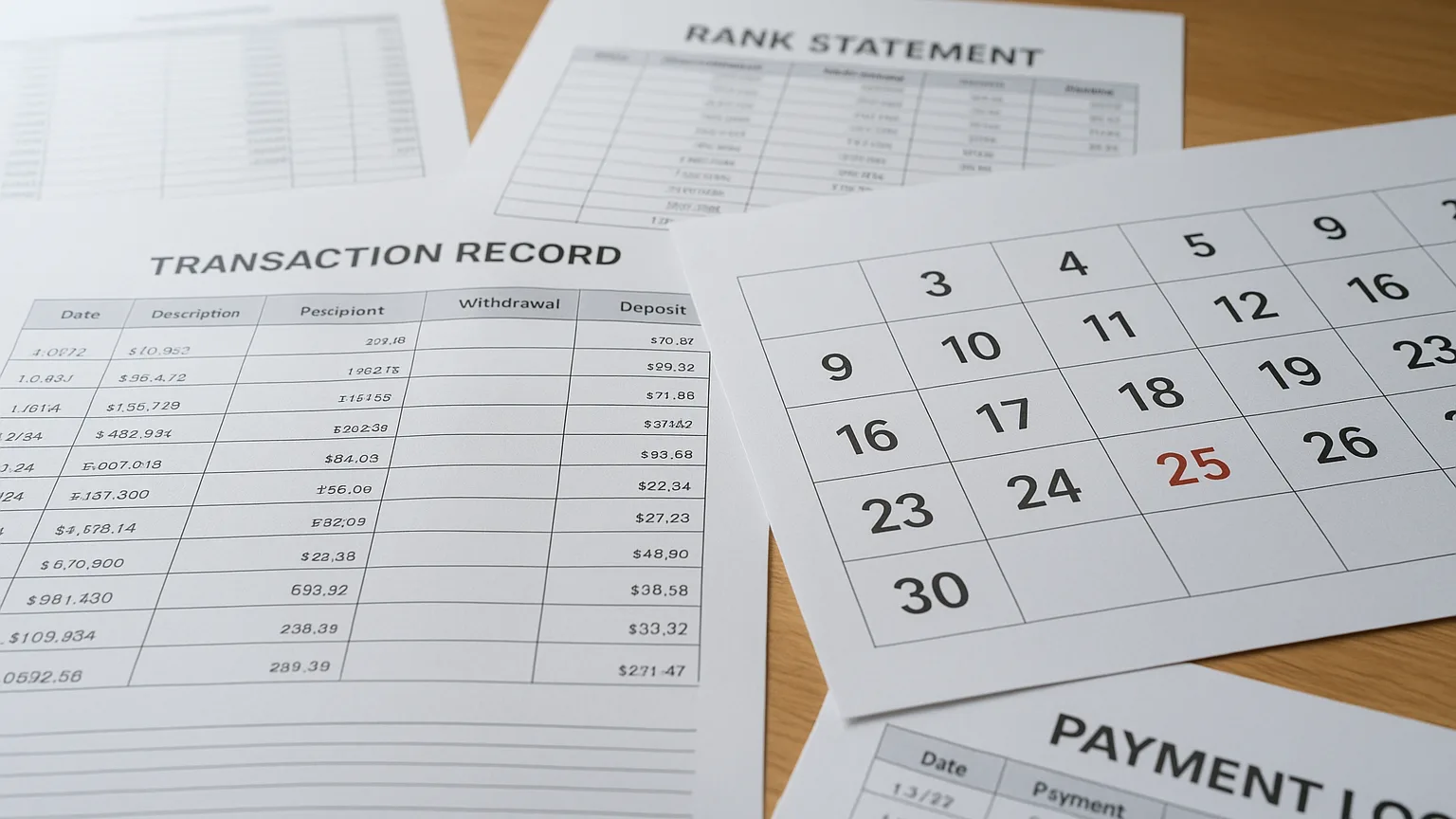
A card swipe sends a payment from terminal to processor to issuing bank in about two seconds, and each of those quick hops leaves a record behind. That record is not one solid block of data. It is built from many small fields, and each can answer a different question in a dispute.
Before picking those fields apart one at a time, it helps to see how the whole payment trail fits together, because a field only proves something once you know which hop created it and how long that party keeps it.
Much of the thinking here was shaped by ePay Management, whose work with law firms and payment processing gives them a close view of how transaction data is built, stored and read.
A transaction record reads less like a receipt and more like a stack of witness statements. The terminal says one thing, the processor another, and the bank adds its own notes. When they agree, you have a strong story. When they don't, you have a lead worth chasing.
The catch is timing. Some fields sit in archives for years. Others live in short logs that roll over within weeks or months. Knowing which is which tells you what to ask for first.
A bank statement shows almost none of this. You usually have to request it.
Detecs investigators move fast to locate, document and preserve the evidence your case depends on.
Get a Free Consultation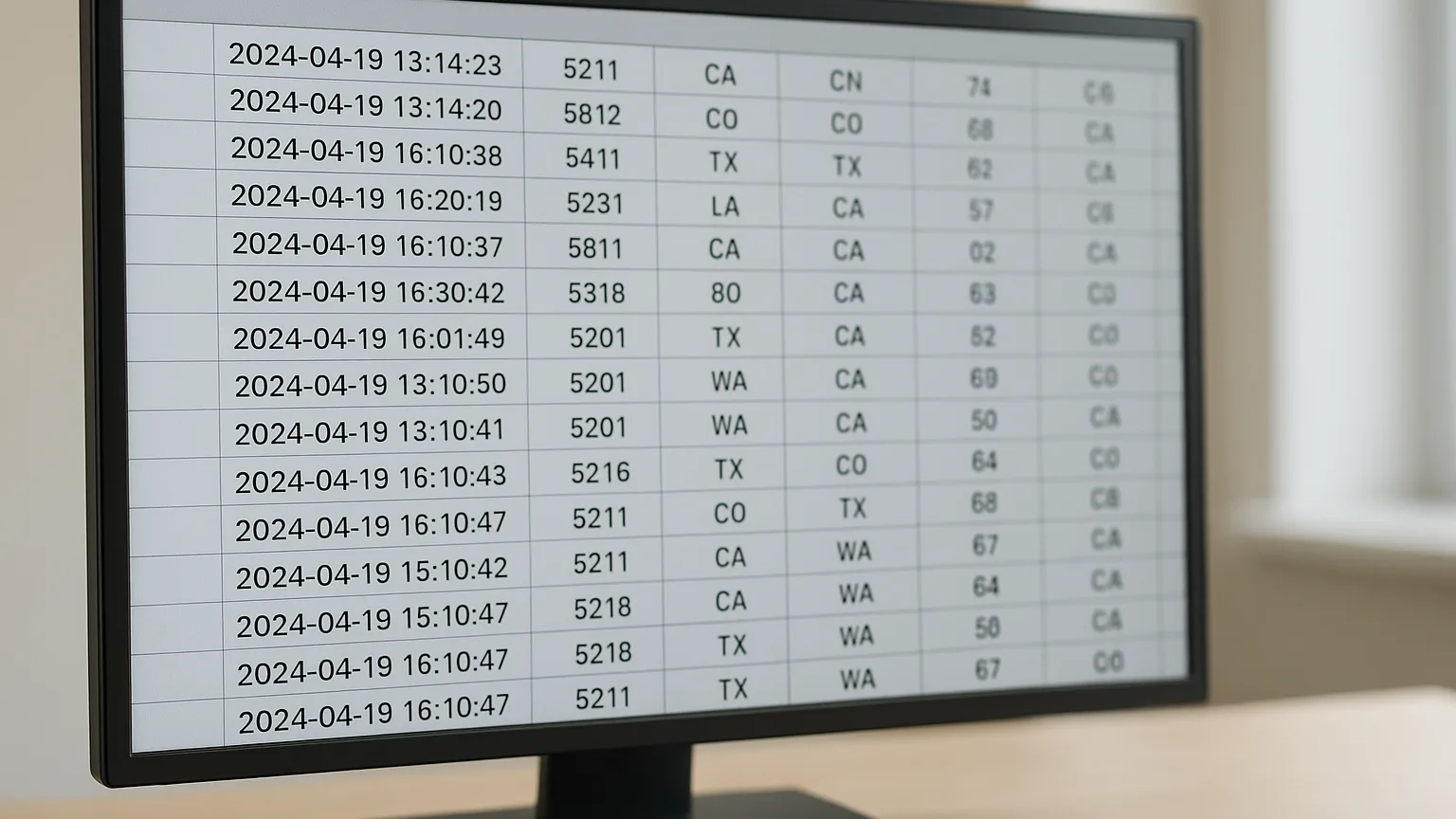
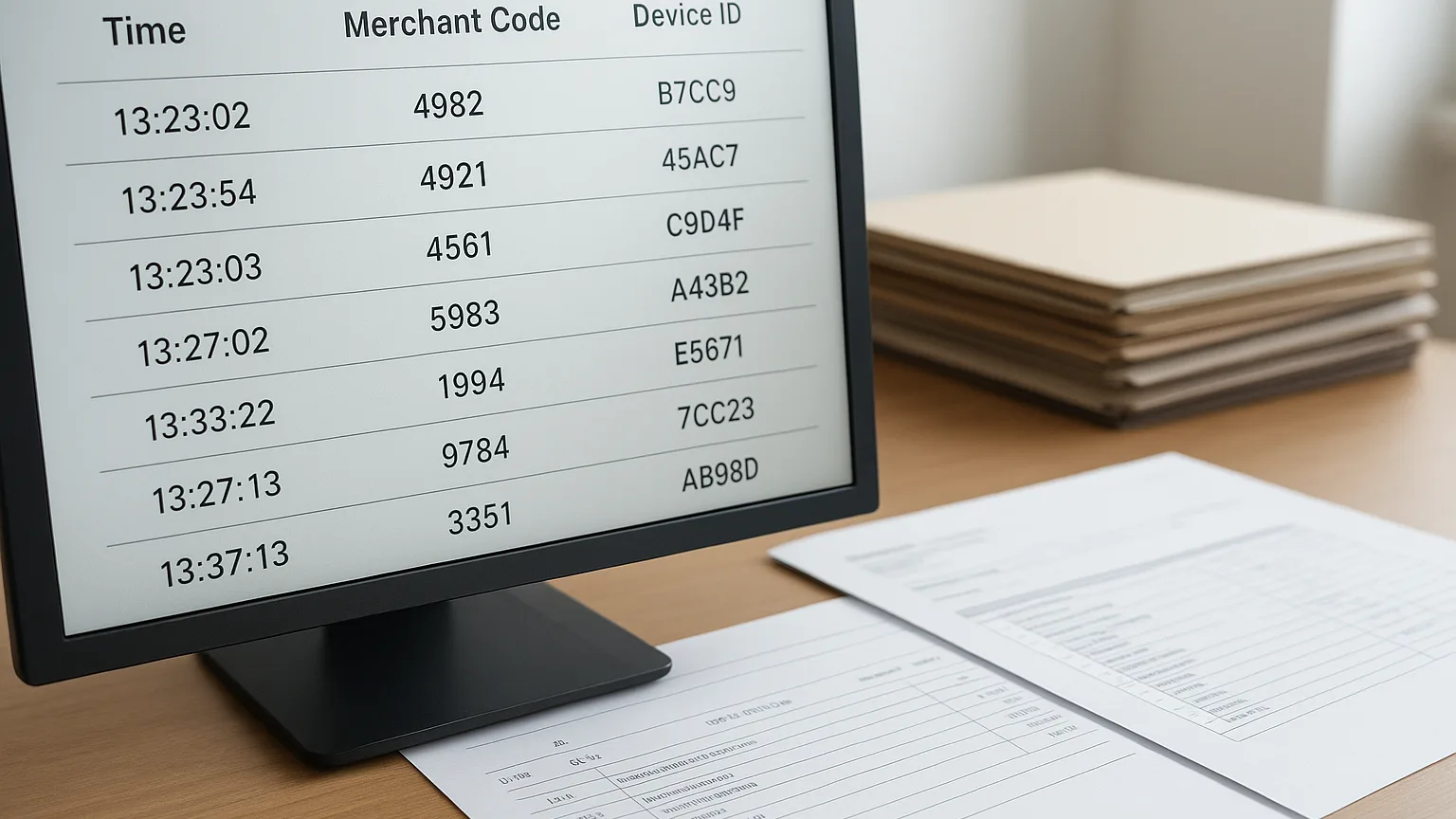
A charge has several times, not one: when the card was approved, when the merchant sent the batch, and when the charge posted. These can be hours or even days apart. A charge might post on Tuesday but have been approved at 11:52 p.m. on Monday. If someone claims they were home all Monday night, the approval time, not the posting date, tests the claim. Time zones add a wrinkle, since some systems log in local time and others in universal time.
Every merchant is tagged with a four-digit category code marking it as a restaurant, hotel, casino, jewelry store or seller of cash-like purchases such as money orders. In a divorce or fraud matter, these codes can show a spending pattern that a vague merchant name hides. A charge listed as "JMK Holdings" means little. The same charge tagged with a gambling code means a lot. Codes can be wrong, though, so treat them as a strong hint that still needs backing up.
Location comes from several sources, each with a different weight:
Put two or three together and you can often place a card, and sometimes a person, with real confidence.
Law firms create the same trail. When clients pay a retainer by card or ACH, the firm generates this very kind of record, which is one reason clean, well-organized law firm invoicing tools help when a fee dispute lands on your own desk.
Every charge carries a code for how the card was read: chip, swipe, tap, typed in by hand, or online with no card present. This one small field can change a case. A chip read is hard to fake, so it suggests the real card was in the room. A swipe on a chip card can point to a copied magnetic stripe. A number keyed in by hand at a store is unusual and worth a closer look. An online charge shifts the focus to devices and accounts.
When someone pays by phone, the merchant often never sees the real card number, only a token tied to that device. That links the charge to a specific phone, not just a card. Online orders may also hold an IP address, a browser profile and a device fingerprint built by fraud tools.
These are among the strongest fields for showing who made a purchase, and among the first to disappear, since fraud and security logs are often kept far shorter than the core charge record. ePay Management, which handles card processing for law firms, sees the same pattern across payment systems: the most revealing details tend to live in the systems that clean themselves out fastest.
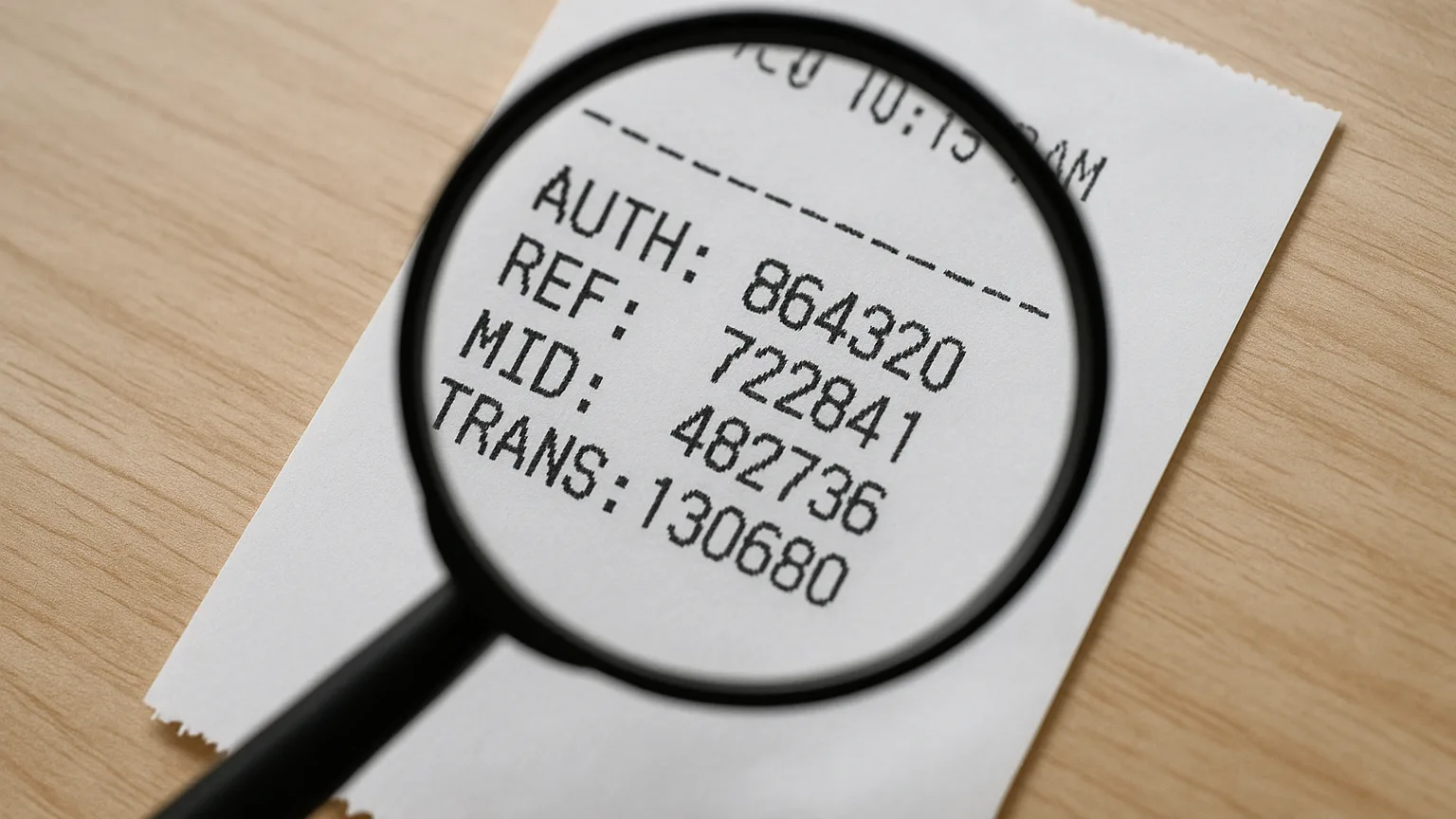
Your request should follow the order of decay. Ask for the fragile fields first, by name, and include the ARN or authorization code so the holder can find the right record fast.
Knowing the fields is only half the job. The other half is knowing who keeps each record and how long banks, processors, merchants and card networks hold onto it before routine deletion kicks in.
A single card charge holds far more than a date and an amount. Layered timestamps can test an alibi. Merchant codes can expose spending a bland name hides. Location sources, entry modes and device tokens can show whether the real card, or the real person, was there at all. Read together, these fields work like a panel of witnesses whose stories either line up or fall apart.
The hard truth is that the most telling fields are often the shortest lived. Learn their names, ask for the fragile ones first, and move before quiet system cleanups do the deleting for you.
Asset searches, financial research and discreet surveillance from a licensed team.
Each part stands on its own, so jump to the one that matches where your case is stuck.

An elite team of private detectives and private investigators diligently serving individuals, businesses, and legal firms worldwide.